
The decision of what kind of windows to use on your new house will be one of the most important decisions you will make. Windows add warmth, beauty and light to your home. Since windows are one of the most visible features of your home both on the inside and on the outside, you'll want to make a wise and practical choice. Most people spend 10 to 15 percent of their home building budget on windows and doors.
Window Configurations Besides size, color and shape, when selecting windows you will also need to decide the window's configuration - in simple terms, how, or if, it opens and closes. There's no one "right" choice, and each has certain advantages and disadvantages but certain areas do lend themselves for easier opening and closing options.
FixedA fixed window, also called a picture window, doesn't swing, tilt or glide. Its sash is permanently fixed to a frame, so if you're looking to let some fresh air in - fixed aren't the way to go. Fixed are often flanked by double-hung windows or casements or set above or below an awning or hopper. From an architectural standpoint - you can get fixed windows in a variety of shapes, including, round, half-round, diamond, trapezoid and custom to enhance the face of your home. These windows won't throw your budget off too much because they're the least expensive style and very energy efficient.
CasementA casement window, often used in traditional homes, opens like a door with hinges on one side and the lock and handle on the other. Casement windows open outward by using a crank handle and allow the entire window surface to be opened. On the down side, they are typically one of the more expensive types of windows, and the outward opening pane can present a potential hazard on lower-floor windows. Casement windows are most popular above a kitchen sink, where you don't want to lean forward and lift a window to open it.
AwningAwning windows are hinged on the top and open out from the bottom - like a door that's been turned on its side - with the latch on the side opposite the hinges. These windows are often seen in contemporary-style homes. They provide minimal ventilation (and a nice look) under large, fixed-pane picture windows. Awning windows open out to an angle of about 30 degrees, which allows you to keep it open on rainy (not rainy and windy) days.
SlidingPerhaps the most common of the operable window configurations is the sliding window, which consists of one fixed pane of glass that is half the width of the window and a second, movable pane of glass of equal size that slides horizontally across to the inside of the fixed pane. In larger sliding windows - typically those over about 8 feet in width - there will be a fixed pane in the middle combined with one sliding pane on either side that move horizontally toward the window's center. Sliding windows are typically the most economical configuration. They have a handle and lock in the center or along one edge, along with a secondary security ventilation lock that allows you to open the window about 2 inches and then lock it in that position.
Sliding windows are designated by which side opens, as viewed from the outside. "X" is used to designate the sliding portion of the window, and "O" for the fixed portion. Therefore an "X-O" window - the most common - will have the left side operable and the right side fixed. A large window with a fixed center pane and two side sliders would be an "X-O-X."
Double-Hung and Single-HungDouble-hung windows open vertically, and both panes are operable - the lower pane moves up and rests inside the upper pane, and the upper pane moves down to the outside of the lower one. Double hung windows offer more ventilation options because you can let air in from both the top or bottom of the window, and are also one of the more traditional styles of window. Single-hung windows, which duplicate the look of the double-hung at a lower cost, have an operable bottom pane that moves up and rests inside the fixed upper pane. Both styles have a center handle and lock, and some also have a security ventilation lock. And added feature to consider is a tilt-wash version of a double-hung window, so you'll never have to go outside to wash your windows. Instead, the windows come to you.
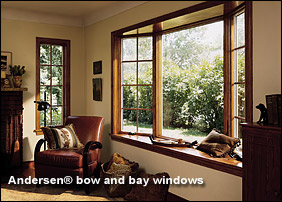
Bay and bow windowsBay windows are a combination of three or more windows that angle out from the house. The center unit is parallel to the house, while the side units sit at an angle (if the angles are squared it's called a box bay). There's also small box bay windows with a glass top that are called garden bay windows and usually are used in the kitchen. Bow windows are multiple windows that curve gradually rather than forming angles.
Hopper windowsThese windows are like awning windows in reverse - they're hinged on the bottom and swing in. Hoppers are typically used in basements or high up on a wall over a large, fixed-pane window.
Glass Options Clear glassWhile clear glass has always been the primary material available for window panes in homes, that is starting to change as homeowners are looking for a new view. Now windows are being glazed- to cut and fit window panes into frames - in a whole new way to help control heat loss, condensation and enhance the design of your home's face. You can get double-glaze windows, which have two layers of glass separated with a space to help trap air and provide some insulation value or triple-glazed which have three layers of glass or two layers with a low-e layer between the two. If you live in an area where weather is extremely hot or cold, triple protection is the best, but they're much heavier and more difficult to operate.
Low-E ("low emissivity") window glassLow E window glass is treated with a layer of invisible, microscopic silver coating to provide greater energy efficiency and increased comfort. Low E stands for "low emissivity", which is the action of reflecting light passing through glass. The benefits of low-e is they reduce the U-Value (conductance of heat) increase the R-Value (resistance to heat flow), making for a more comfortable environment. It also helps cut back on harmful UV rays (by 78%) that over time will fade your rugs and furniture.
Specialty glass optionsToday most reputable glass manufacturers offer interesting combinations of window glass options to protect you from the sun and neighborhood noise to help you build a safe and private home.
You can get your glass obscured in a variety of colors and texture patterns to create a translucent to semi-opaque look or tinted to provide additional shading (tones include bronze, gray, evergreen and azurite - names vary from manufacturer). Other options to considers are high performance glass like tempered which is the Hercules of glass. Not only is it extra strong but if it breaks, it won't shatter into a zillion sharp edges, but rather a zillion pebble-like pieces. If you don't want to be affected by excessive outdoor noise, then you might want to consider laminated glass, which is very effective in reducing noise. It also eliminates 99.9% of UV (ultraviolet) rays.
Types of Frame Materials Window frames are available in a variety of materials including aluminum, wood, vinyl, fibrex, and fiberglass. Frames may be primarily composed of one material, or they may be a combination of different materials such as wood and vinyl and each frame material has its advantages and disadvantages.
Aluminum is ideal for customized window design, however, aluminum frames cause conductive heat loss (i.e., they have low R-values) and condensation. By inserting thermal breaks made of insulating plastic strips between the inside and outside of the frame and sash you can greatly improve the thermal resistance of aluminum frames.
The benefits of wood is it produces higher R-values, are unaffected by temperature extremes, and are less prone to condensation, but they do require some maintenance - like periodic painting. A note of caution; if wood frames are not properly protected from moisture, they can warp, crack, and stick.
Vinyl windows are made primarily from polyvinyl chloride (PVC), which offers many advantages, like a large selection of styles and shapes, moderate to high R-values, easily customized, competitively priced, require low maintenance, and mold easily into almost any shape.
Fiberglass is relatively new and not yet widely available. They have the highest R-values of all frames and are excellent for insulating and will not warp, shrink, swell, rot, or corrode. Fiberglass frames can be made in a variety of colors and can hold large expanses of glass. Some fiberglass frames are hollow and others are filled with fiberglass insulation.
Fibrex material is a blend of wood fiber and specially formulated thermo-plastic polymer. This unique window material is made from reclaimed wood fiber from the Andersen Window Corporation's 65 acre manufacturing operation in Bayport, Minnesota. Fibrex combines excellent strength, insulation properties and provides low maintenance.
Room with a View Windows make a big impression on how your home is looked at - from the inside and out. Your windows should fit in with the overall style of your house and they should make you house look inviting. How you create that look depends on personal taste. Some people like lots of large windows, while other people are more conservative and opt for smaller windows. No matter what size, style or quantity of windows you choose it's important to remember that the view you see from your home is a powerful one - one that controls the ambiance of the room your in.
Heating Up a Room There are three ways that heat goes through a window - radiation, conduction and convection.
Radiation is heat that you can feel, like the sun's rays coming through your window pane. This heat goes through the window like light does.
Conduction is the heat a solid material carries from one place to another, like from one side of a window pane to the other.
Convection is the heat that is carried by air from one place to another. Heat is carried by convection between the panes of glass in a double pane window.
Today's modern window construction is designed to tackle all three of these heat mechanisms to keep heat from escaping your home. One way is using panes made of low-e (low-emissivity) glass, which involves a special manufacturing process that reduces the ability of the glass to pass certain heat rays while still letting you see through the window. Conduction through the glass itself is unavoidable, but you can minimize the heat loss by using frames that are not good heat conductors like vinyl (wood and aluminum also work). To minimize convection between the panes of glass, the space is filled with a gas, usually argon. The problem with argon is that there is no way to keep it there forever. After time it will start to leak out (being replaced with plain old air) causing your window to be a poor insulator and you will start to notice moisture between the panes. Your only recourse is to see if your window is covered by a lifetime warranty, get the manufacturer to replace it or simply live with it.
Understanding Energy Codes Windows are rated by a standardized process resulting in a U-rating, which is a decimal fraction smaller than 1. The lower the number the better the window in terms of energy efficient. A good window will have a U-rating of less then 0.5. It is important to note that spending your money on a really low-rated window is not very cost effective - because its effectiveness compared to a 0.5 rated window is so minute it's not worth the additional cost. In some states where saving energy in the home is a big political issue, you may be forced to abide by low-e, low U-rated windows to meet energy code requirements.
Skylights A big trend in house designs is including skylights. They're generally used in rooms where windows would be inconvenient, like small bathrooms or interior rooms where windows aren't possible. The drawbacks to skylights are they are poor insulators and virtually impossible to shade unless you use a glass that is tinted or low e-glass. Most skylights range from one to four feet.
Light Funnels A relatively new product for homes are metal tubes that funnel light from the roof down into a room. A small glass or plastic dome is mounted on the roof with appropriately shaped reflectors to capture the sunlight. At the bottom end a diffuser spreads the light around in the room, creating a unique ambiance. Unlike skylights which deliver natural sunlight, light funnels have a distinct cold metallic cast because the light is reflecting off the aluminum that makes up the tube.
Don't Forget to Weatherstrip Weatherstripping is a very important component to your window because it provides a seal between the window-frame and the operable sash. It's used to prevent air leakage, and the better the weatherstripping, the better the window performance. There are two types of weatherstripping - wiper or brush and compression. Brush-type seals (sometimes referred to as "mohair") are common in sliding windows but tend to wear out quickly. Compression or bulb seals can crack easily in cold weather if the seal wall is too thin, so be generous in its application. No matter how you seal it - this vulnerable component to your window will need to be checked yearly and probably replaced.
Source
thehousedesigners.com

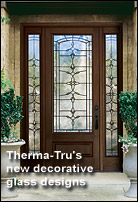
 For most people, exterior doors provide three things: security, weather protection, and style. There are many different styles to choose from that will allow all three things. You can get paneled, flush, or glass in front entry doors, back doors, French doors, sliding doors, and patio doors.
 Your front door is the focal point of your home. For this reason, you should choose the entry hardware wisely. Not only does this give the first impression of your home, but also secures your home against intruders. When you choose the entry hardware, remember that that locks are not always included. Below is good information to guide you in the selection of your entry door hardware.
 Interior doors are normally constructed from lighter material than exterior doors. They do not require the protection from weather and home security features. They are simply a feature for privacy. Interior door material can be solid wood, hollow core wood, solid core wood, or fiberglass. The standard width of interior doors is normally 30 or 32 inches. They come in styles such as swinging, pocket, glide, and folding.
 There are several types of doors available for different needs. All doors are considered either exterior or interior models. The main differences between interior and exterior doors is the construction, weather-tightness, weight, and other related factors that determine their exposure and use.


